You're listening to the audio version of "A Gentle Cold-Process Tallow Soap," from Admire Age.
This is a creamy, long-lasting bar made the old way. One hundred percent grass-fed tallow, gently cleansing and mild. This one asks for patience and respect, because it's a cold-process soap, which means working with lye. Listen through the safety notes, take your time, and you'll have bars worth the wait.
Before anything else, the safety, because this recipe genuinely requires it. Lye, or sodium hydroxide, is caustic. Always add lye to water, never water to lye. Wear gloves and eye protection, and work in a ventilated space away from children and pets. Run your exact amounts through a lye or soap calculator before mixing. And cure the bars fully, four to six weeks, so the finished soap is mild and gentle.
The active time is about forty-five minutes, the difficulty is advanced because of the lye, and it yields about eight to ten bars.
Why it works: tallow makes a hard, creamy bar with a stable lather, which is the reason it was the backbone of soap for centuries. Cured slowly, it turns mild and gentle enough for everyday washing.
Here's what you'll need. Two pounds of rendered, cosmetic-grade grass-fed tallow. Nine ounces of distilled water. Four ounces of lye, sodium hydroxide, and use a soap calculator to confirm the amount for your batch. Optionally a skin-safe essential oil, and a soap mold. For equipment, a stick blender, a scale, gloves, goggles, long sleeves, and a ventilated space.
The method runs six steps. First, gear up: gloves, goggles, long sleeves, good ventilation. Second, in a well-ventilated area, add the lye to the water, never water to lye, stir until clear, and let it cool to about one hundred to one hundred ten degrees Fahrenheit. Third, melt the tallow to that same range so both are within about ten degrees of each other. Fourth, slowly pour the lye solution into the tallow and blend in short bursts to a light, pudding-like trace. Fifth, add the essential oil if using, pour into the mold, cover, and rest for twenty-four hours. And sixth, unmold, cut into bars, and cure on a rack for four to six weeks before use.
Three tips. Always run your exact weights through a lye calculator before you begin, because every batch is different and accuracy is what keeps the bar gentle. Soap at a relaxed pace, since rushing the trace or the cure is where most first batches go wrong. And line your mold with parchment for an easy release, resisting the urge to cut too soon, because firmer bars slice cleaner.
On storage, cure the bars on a rack with good airflow for four to six weeks before use. This is what makes them hard, mild, and long-lasting. Finished bars keep for a year or more somewhere cool and dry.
Some questions that come up. Do you really have to use lye? Yes. There's no such thing as soap without it. Lye reacts with the fats and is fully transformed during curing, so a properly cured bar contains none. The care is all in the making. How do you know it's safe to use? A fully cured bar, four to six weeks, is mild and ready. If you want certainty, a soap pH test strip should read in the gentle range. And can you add fragrance? A skin-safe essential oil added at trace works well. Keep the amount modest and choose one suited to soap.
Thanks for listening. You'll find the full recipe, with the complete safety guidance written out, at admireage.com.
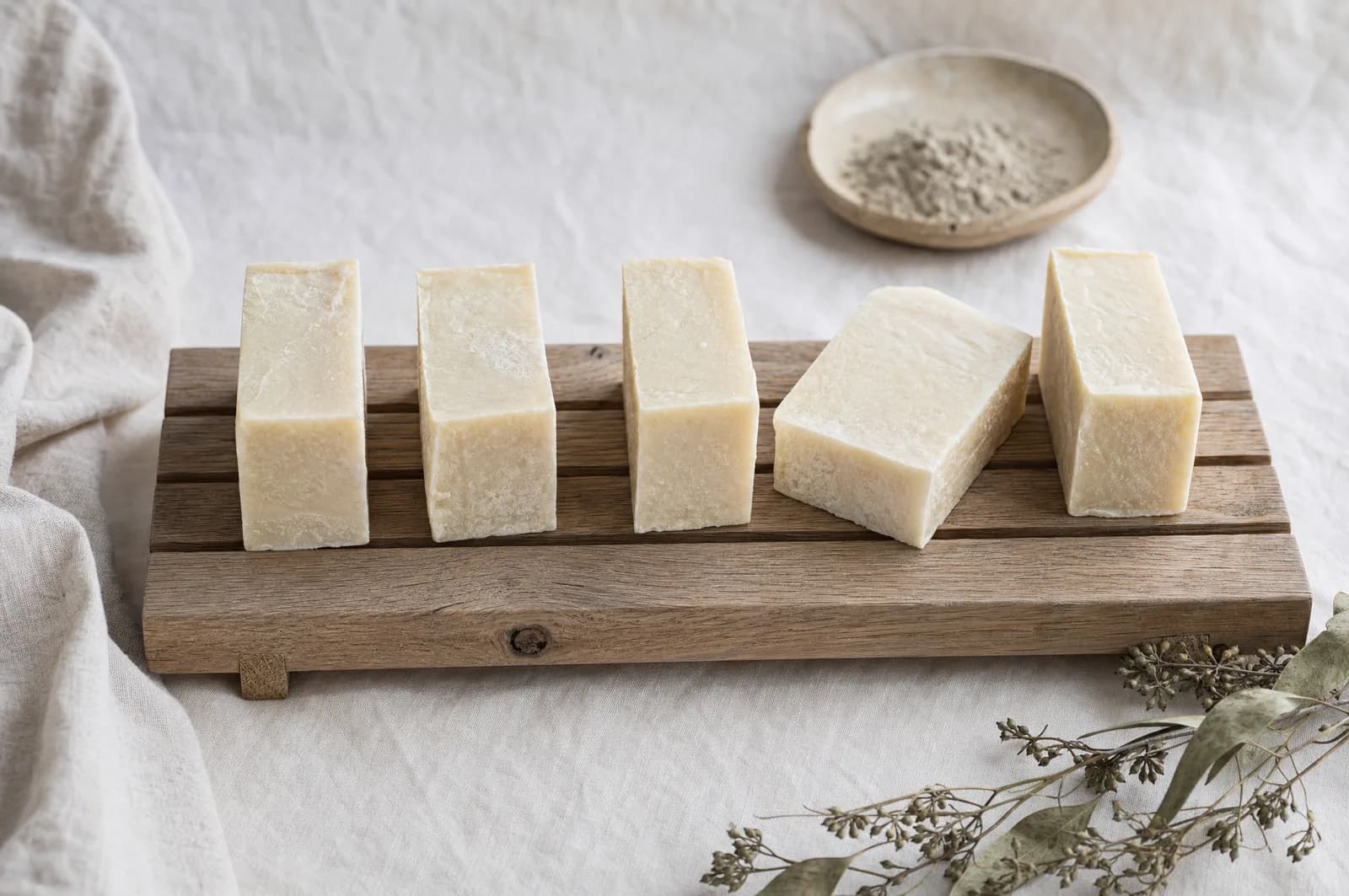
A gentle cold-process tallow soap
A creamy, long-lasting bar made the old way — 100% grass-fed tallow, gently cleansing and mild. This one asks for patience and respect: it's a cold-process soap, which means working with lye. Read the safety notes, take your time, and you'll have bars worth the wait.
About 8–10 bars45 minAdvanced — involves lye
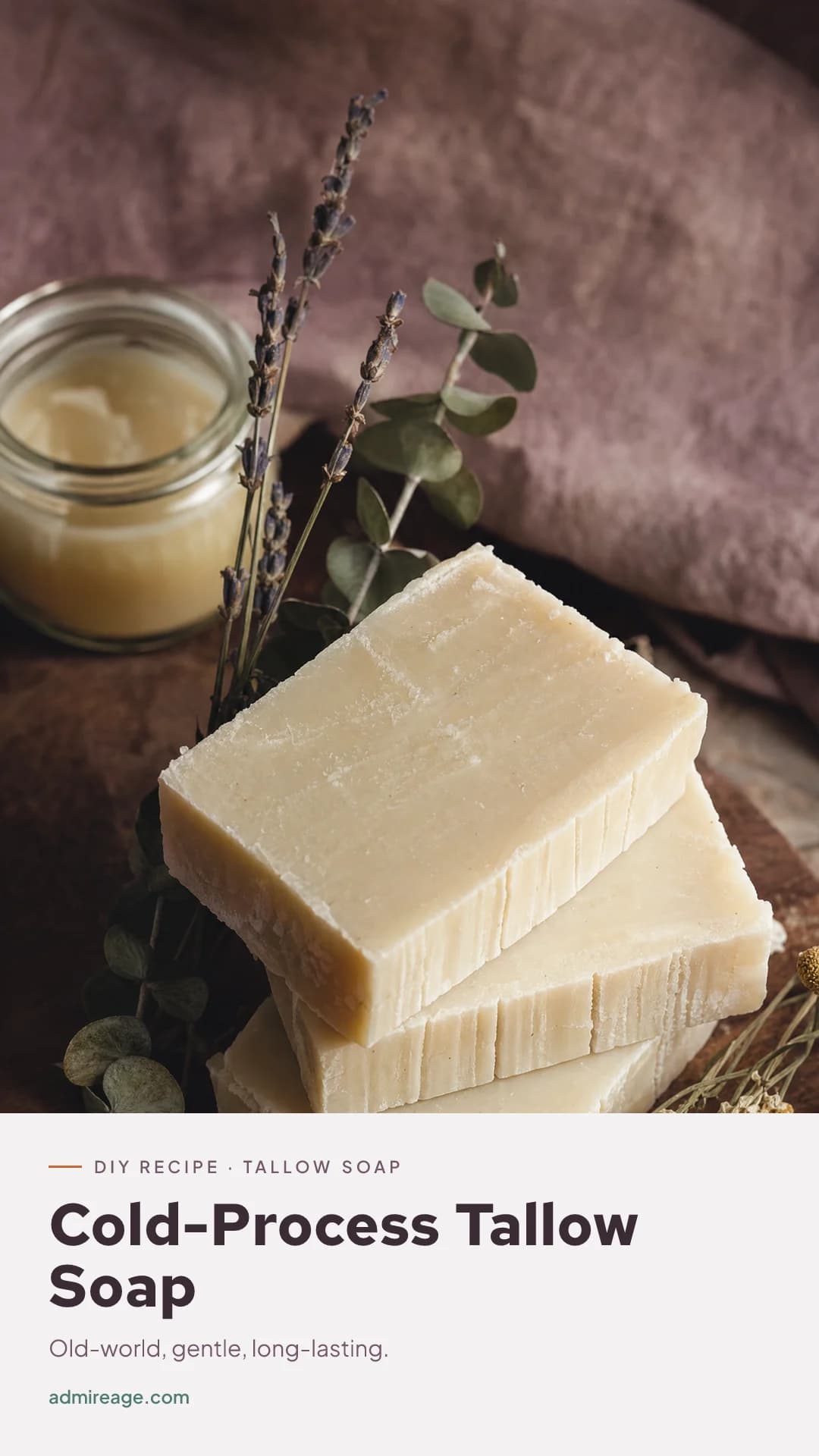
Why this works
Tallow makes a hard, creamy bar with a stable lather — the reason it was the backbone of soap for centuries. Cured slowly, it turns mild and gentle enough for everyday washing.
What you'll need
- 2 lb grass-fed tallow (rendered, cosmetic-grade)
- 9 oz distilled water
- 4 oz lye (sodium hydroxide) — use a soap calculator to confirm for your batch
- Optional: skin-safe essential oil; a soap mold
- Stick blender, scale, gloves, goggles, long sleeves, a ventilated space
Before you start
- Lye (sodium hydroxide) is caustic. Always add lye TO water, never the reverse.
- Wear gloves and eye protection and work in a ventilated space away from kids and pets.
- Run your exact amounts through a lye/soap calculator before mixing.
- Cure bars fully (4–6 weeks) so the finished soap is mild and gentle.
How to make it
- 1
Gear up: gloves, goggles, long sleeves, good ventilation.
- 2
In a well-ventilated area, add lye to the water (never water to lye); stir until clear and let cool to ~100–110°F.
- 3
Melt the tallow to ~100–110°F so both are within ~10°F of each other.
- 4
Slowly pour the lye solution into the tallow and blend in short bursts to a light, pudding-like trace.
- 5
Add essential oil if using, pour into the mold, cover, and rest 24 hours.
- 6
Unmold, cut into bars, and cure on a rack 4–6 weeks before use.
Maker's tips
- Always run your exact weights through a lye calculator before you begin — every batch is different, and accuracy is what keeps the bar gentle.
- Soap at a relaxed pace. Rushing the trace or the cure is where most first batches go wrong.
- Line your mold with parchment for an easy release, and resist cutting too soon — firmer bars slice cleaner.
Keeping it fresh
Cure the bars on a rack with good airflow for four to six weeks before use — this is what makes them hard, mild, and long-lasting. Finished bars keep for a year or more somewhere cool and dry.
Common questions
- Do I really have to use lye?
- Yes — there's no such thing as soap without it. Lye reacts with the fats and is fully transformed during curing, so a properly cured bar contains none. The care is all in the making.
- How do I know it's safe to use?
- A fully cured bar (four to six weeks) is mild and ready. If you want certainty, a soap pH test strip should read in the gentle range.
- Can I add fragrance?
- A skin-safe essential oil added at trace works well — keep the amount modest and choose one suited to soap.
Keep reading
Love the ritual, not the cleanup?
Making your own is a joy — but on the busy weeks, ours is whipped, jarred, and ready. Same grass-fed tallow, none of the dishes.
DIY safety note
Keep homemade tallow skincare clean, simple, and short-lived
Most homemade tallow balms and butters are preservative-free, so how long a batch lasts comes down to careful rendering, clean jars, dry hands, and cool storage. Strain the rendered fat well to remove water and solids, since water is the main cause of early rancidity.
If the scent, color, or texture starts to change, treat that as a possible rancidity sign and stop using the batch. Make small amounts you will finish in a few months.
- Render low and slow from grass-fed suet, then strain until the fat runs clear.
- Dilute essential oils carefully, especially for sensitive or reactive skin.
- Patch test any new recipe on your inner arm before using it on your face.