You're listening to the audio version of "Lavender Tallow Soap Bar," from Admire Age.
This has everything to love about a classic tallow bar, softened with calming lavender. It's a cold-process soap, so it asks for the same care and patience as any lye recipe, but the reward is a creamy, gently scented bar that lingers in the best way.
The safety first, because this recipe needs it. Lye, or sodium hydroxide, is caustic. Always add lye to water, never water to lye. Wear gloves and eye protection, and work in a ventilated space away from children and pets. Run your exact amounts through a lye or soap calculator before mixing. Keep essential oils within skin-safe limits for soap, and cure the bars fully, four to six weeks.
Active time is about forty-five minutes, the difficulty is advanced because of the lye, and it yields about eight to ten bars.
Why it works: tallow gives the bar its creamy lather and long life, while a measured amount of lavender essential oil adds a soft, soothing scent that survives the cure.
Here's what you'll need. Two pounds of rendered, cosmetic-grade grass-fed tallow. Nine ounces of distilled water. Four ounces of lye, confirmed for your batch with a soap calculator. Zero point seven to one ounce of lavender essential oil, added at trace. Optionally, dried culinary lavender buds for the tops. For equipment, a stick blender, a scale, gloves, goggles, long sleeves, a soap mold, and a ventilated space.
The method runs six steps. First, gear up: gloves, goggles, long sleeves, good ventilation. Second, in a well-ventilated area, add the lye to the water, never water to lye, stir until clear, and let it cool to about one hundred to one hundred ten degrees Fahrenheit. Third, melt the tallow to that same range so both are within about ten degrees of each other. Fourth, slowly pour the lye solution into the tallow and blend in short bursts to a light, pudding-like trace. Fifth, blend in the lavender essential oil, pour into the mold, scatter buds on top if using, cover, and rest twenty-four hours. And sixth, unmold, cut into bars, and cure on a rack for four to six weeks before use.
Three tips. Add the lavender oil at light trace, because too early and the scent can fade, too late and it can seize the batch. Run your exact amounts through a lye or soap calculator every time and don't eyeball it. And dried buds look beautiful but can brown in the bar, so a light scatter on top ages best.
For storage, cure on a well-aired rack for four to six weeks, turning occasionally. Cured bars keep a year or more somewhere cool, dry, and out of direct sun.
A few questions. Will the lavender scent last? A properly measured lavender essential oil added at trace holds up well through the cure, though all natural scents soften over time. Can you use dried lavender inside the bar? A little on top is prettiest. Buds worked all the way through can scratch and may brown, so keep them sparing. And is this gentle enough for daily use? Once fully cured, a tallow bar is mild and creamy. As always, patch test, and skip it if your skin is reactive to fragrance.
Thanks for listening. You'll find the full recipe at admireage.com.
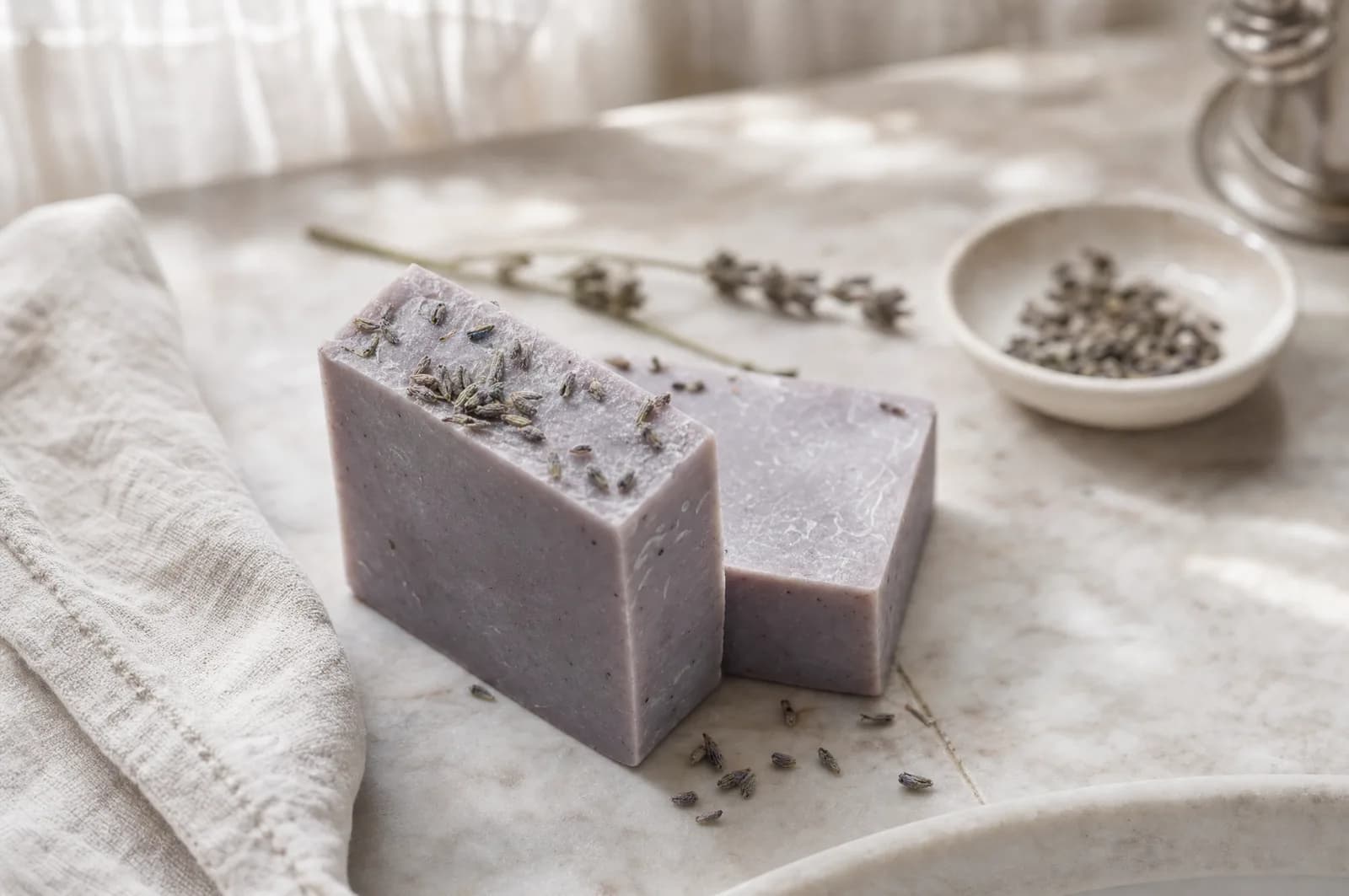
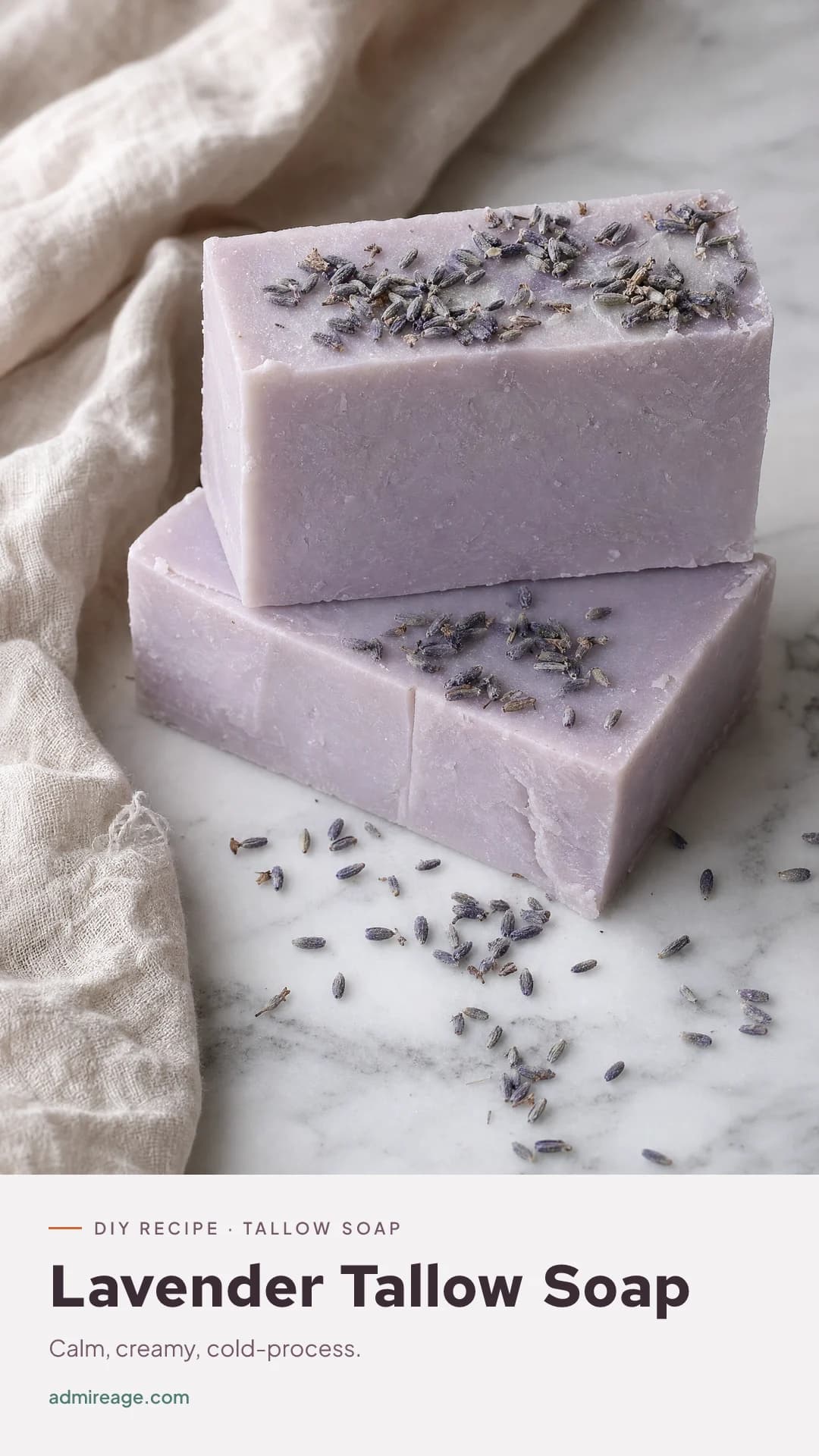
Lavender tallow soap bar
Everything to love about a classic tallow bar, softened with calming lavender. It's a cold-process soap, so it asks for the same care and patience as any lye recipe — but the reward is a creamy, gently scented bar that lingers in the best way.
About 8–10 bars45 minAdvanced — involves lye
Why this works
Tallow gives the bar its creamy lather and long life, while a measured amount of lavender essential oil adds a soft, soothing scent that survives the cure.
What you'll need
- 2 lb grass-fed tallow (rendered, cosmetic-grade)
- 9 oz distilled water
- 4 oz lye (sodium hydroxide) — confirm for your batch with a soap calculator
- 0.7–1 oz lavender essential oil (added at trace)
- Optional: dried culinary lavender buds for the tops
- Stick blender, scale, gloves, goggles, long sleeves, a soap mold, a ventilated space
Before you start
- Lye (sodium hydroxide) is caustic. Always add lye TO water, never the reverse.
- Wear gloves and eye protection and work in a ventilated space away from kids and pets.
- Run your exact amounts through a lye/soap calculator before mixing.
- Keep essential oils within skin-safe limits for soap, and cure bars fully (4–6 weeks).
How to make it
- 1
Gear up: gloves, goggles, long sleeves, good ventilation.
- 2
In a well-ventilated area, add the lye to the water (never water to lye); stir until clear and let it cool to ~100–110°F.
- 3
Melt the tallow to ~100–110°F so both are within ~10°F of each other.
- 4
Slowly pour the lye solution into the tallow and blend in short bursts to a light, pudding-like trace.
- 5
Blend in the lavender essential oil, pour into the mold, scatter buds on top if using, cover, and rest 24 hours.
- 6
Unmold, cut into bars, and cure on a rack 4–6 weeks before use.
Maker's tips
- Add lavender oil at light trace — too early and the scent can fade, too late and it can seize the batch.
- Run your exact amounts through a lye/soap calculator every time; don't eyeball it.
- Dried buds look beautiful but can brown in the bar — a light scatter on top ages best.
Keeping it fresh
Cure on a well-aired rack for four to six weeks, turning occasionally. Cured bars keep a year or more somewhere cool, dry, and out of direct sun.
Common questions
- Will the lavender scent last?
- A properly measured lavender essential oil added at trace holds up well through the cure — though all natural scents soften over time.
- Can I use dried lavender inside the bar?
- A little on top is prettiest. Buds worked all the way through can scratch and may brown, so keep them sparing.
- Is this gentle enough for daily use?
- Once fully cured, a tallow bar is mild and creamy. As always, patch test and skip it if your skin is reactive to fragrance.
Keep reading
Love the ritual, not the cleanup?
Making your own is a joy — but on the busy weeks, ours is whipped, jarred, and ready. Same grass-fed tallow, none of the dishes.
DIY safety note
Keep homemade tallow skincare clean, simple, and short-lived
Most homemade tallow balms and butters are preservative-free, so how long a batch lasts comes down to careful rendering, clean jars, dry hands, and cool storage. Strain the rendered fat well to remove water and solids, since water is the main cause of early rancidity.
If the scent, color, or texture starts to change, treat that as a possible rancidity sign and stop using the batch. Make small amounts you will finish in a few months.
- Render low and slow from grass-fed suet, then strain until the fat runs clear.
- Dilute essential oils carefully, especially for sensitive or reactive skin.
- Patch test any new recipe on your inner arm before using it on your face.