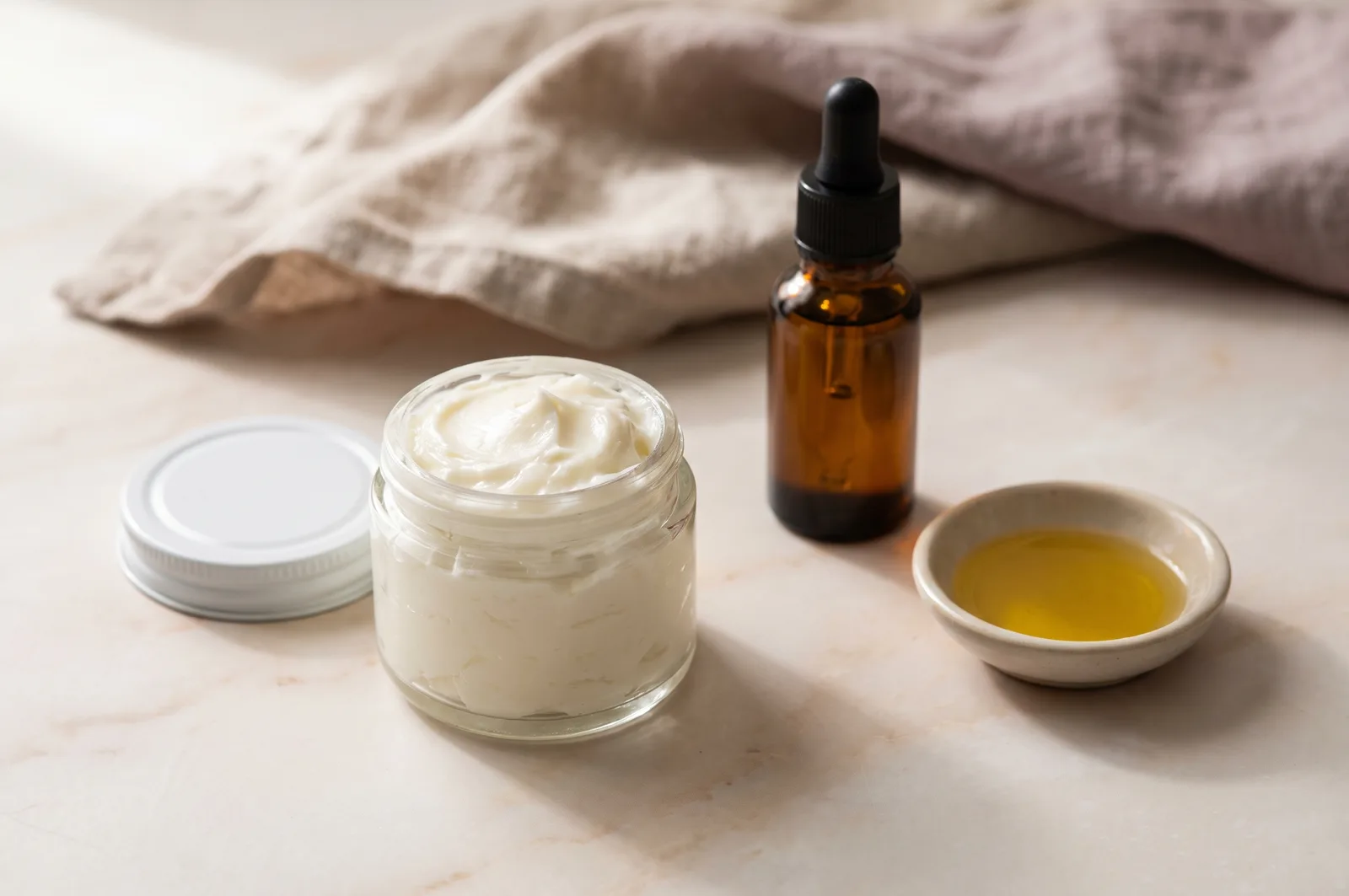
Tallow and castor oil face cream
This whipped tallow and castor oil face cream recipe comes together in about 20 minutes and fills one lovely 2 oz jar. It melts into skin with a soft sheen, leaving dry, mature skin feeling cushioned, supple, and deeply nourished. Simple, ancestral, and yours.
Fills one 2 oz jar20 minBeginner-friendly
Why this works
Grass-fed tallow is rich in oleic, palmitic, and stearic acids, in proportions similar to your skin's own sebum, so skin tends to accept it readily. A teaspoon of castor oil adds glide and a soft sheen.
What you'll need
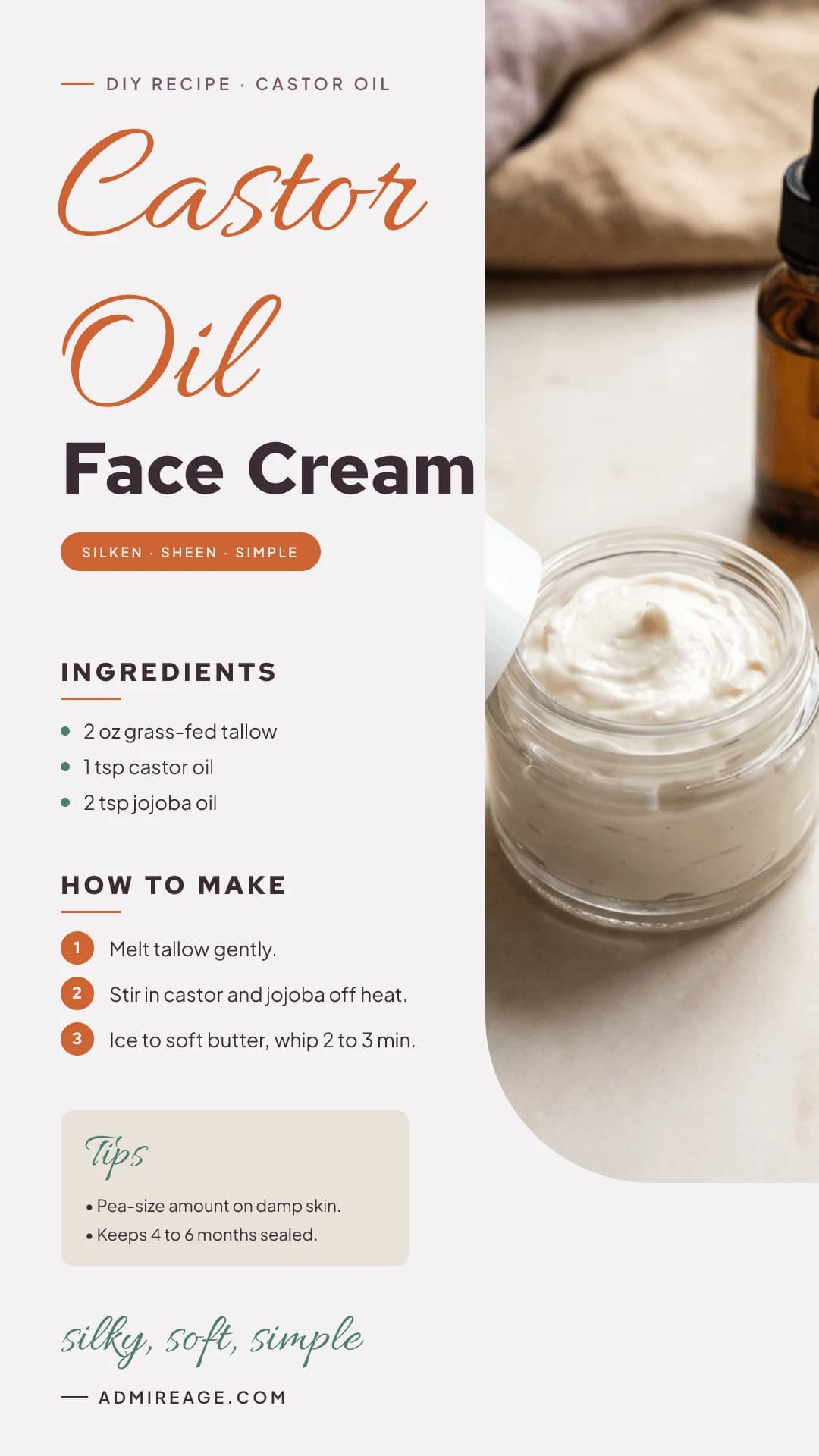
- 2 oz grass-fed tallow (cosmetic-grade, by weight)
- 1 tsp castor oil
- 2 tsp jojoba oil
- Optional: 2 to 3 drops skin-safe essential oil, such as lavender
- Double boiler, hand mixer, a bowl of ice, a clean 2 oz jar
Before you start
- Patch test on your inner arm first, and try the cream at night to start.
- Keep all tools and the jar fully dry, because water shortens shelf life.
- Keep the cream away from your eyes. Rich creams can clog pores for some people.
How to make it
- 1
Melt 2 oz of grass-fed tallow in a double boiler over low heat, until it is just liquid.
- 2
Take the bowl off the heat and stir in 1 tsp castor oil and 2 tsp jojoba oil.
- 3
Nest the bowl in ice and cool until it firms to the softness of soft butter.
- 4
Whip on medium for 2 to 3 minutes, until the cream turns pale and fluffy.
- 5
Whip in 2 to 3 drops of skin-safe essential oil if using, then spoon into your clean 2 oz jar. It firms up over 24 hours.
Maker's tips
- Castor oil is powerful in small doses. Stick to one teaspoon, because more can make the cream feel tacky.
- Jojoba oil is light and thins the blend, so your cream spreads easily across the skin.
- Apply a pea-sized amount to slightly damp skin and gently press it in.
Keeping it fresh
This cream is water-free, so no preservative is needed. Keep it in a clean, dry jar away from light and heat, and it will keep for about four to six months. Use clean, dry fingers or a small spoon each time.
Common questions
- Why add castor oil?
- Castor oil is very thick and made mostly of ricinoleic acid. In a small amount, it adds glide and a soft sheen to the whipped cream, helping it spread smoothly over dry, mature skin.
- Can I use more castor oil?
- We suggest sticking to one teaspoon in this batch. Castor oil is very thick, and more than about a teaspoon can make the finished cream feel tacky on the skin rather than soft and silky.
- Is it okay for acne-prone skin?
- Honestly, rich balms can clog pores for some people. If your skin is acne-prone, patch test first, start with a small amount, and see how your skin responds before making it part of your routine.
Keep reading
Love the ritual, not the cleanup?
Making your own is a joy — but on the busy weeks, ours is whipped, jarred, and ready. Same grass-fed tallow, none of the dishes.
DIY safety note
Keep homemade tallow skincare clean, simple, and short-lived
Most homemade tallow balms and butters are preservative-free, so how long a batch lasts comes down to careful rendering, clean jars, dry hands, and cool storage. Strain the rendered fat well to remove water and solids, since water is the main cause of early rancidity.
If the scent, color, or texture starts to change, treat that as a possible rancidity sign and stop using the batch. Make small amounts you will finish in a few months.
- Render low and slow from grass-fed suet, then strain until the fat runs clear.
- Dilute essential oils carefully, especially for sensitive or reactive skin.
- Patch test any new recipe on your inner arm before using it on your face.