A note before we start
We make tallow creams at Admire Age, and that is exactly why we want to be straight with you about where tallow can go wrong. Tallow is not for everyone, and that is fine.
The side effects to watch for
Here is what dermatologists watch for, and what each one looks like.
- Clogged pores and breakouts. Tallow is rich and occlusive, which means it slows water loss from the surface of your skin. E. Victor Ross, MD, a dermatologist at Scripps Clinic, says: “For people with really dry skin and no history of breakouts, a small amount may be tolerated. However, those with acne-prone skin, oily skin or sensitive skin should be careful as they are more likely to experience pore clogging or breakouts.” The American Academy of Dermatology’s guidance to dermatologists includes counseling patients on possible acne worsening in acne-prone skin. If you are wondering whether tallow will clog your pores, read will tallow clog pores?
- Small red bumps around hair follicles. Folliculitis is a common skin infection that develops in the hair follicles. It can look like acne, with small red bumps or pimples around the follicles. The American Academy of Dermatology advises dermatologists to tell patients to stop using a product if folliculitis develops.
- An itchy rash or redness. Fragrance is among the most common causes of allergic contact dermatitis, an itchy rash from an allergy. The reaction may come from what is added to the tallow rather than the tallow itself. A 2013 study found that olive oil applied to adult forearms for four weeks weakened the skin barrier and caused mild redness. In the interest of full disclosure, all three Admire Age tallow creams contain organic olive oil and pure essential oils for scent. These are fir needle and lavender, lemongrass and lavender, or sweet orange and bergamot. None uses synthetic fragrance. Our product pages already tell fragrance-sensitive skin to patch test first. For more on this, see understanding natural fragrance in tallow.
- Skin that feels tight underneath but looks shiny. Tallow holds water in but adds none. If your skin is low on water, a thick layer of fat alone can leave it feeling tight underneath while the surface looks shiny. Dry skin lacks oil. Dehydrated skin lacks water. Apply tallow to damp skin and use less, not more. This is a fit problem, not an allergy.
- Problems from an old or contaminated jar. Pure tallow has no preservatives, so it may spoil or go rancid faster than other products. All fats oxidize over time, and heat, light, and air speed that up. Gone-off tallow smells sharp, sour, or stale, like old crayons or paint. Storage and contamination are among the concerns in the American Academy of Dermatology’s guidance to dermatologists. Store your jar with the lid on, somewhere cool and dark, keep water out of it, and scoop with clean, dry fingers or a small spatula. See how long tallow lasts.
Why some dermatologists are wary
Some dermatologists urge caution about the tallow trend, and much of what they flag is worth taking seriously. Angela Wei, MD, a dermatology resident at Cleveland Clinic, says: “There’s no evidence that shows beef tallow has any additional benefits for your skin beyond being a natural moisturizer.” It is also worth knowing that in the US, cosmetics do not need FDA approval before they are sold. Each company is responsible for the safety of its own products. Meanwhile, a 2025 analysis of tallow posts on YouTube, Instagram, and TikTok found that most posts promoting it showed financial bias and came from people without healthcare credentials, and that claims about acne, eczema, and psoriasis mostly lacked cited evidence.
Our take is simple. We agree. Tallow is a moisturizer, not a treatment, and that is how we present it. To read the fuller discussion, see our tallow skin care guide.
What the research does and doesn’t tell us
Human studies on tallow applied to skin are few. A 2024 scoping review found that much of the research on tallow’s side effects looked at chemicals made from tallow, such as tallow-based surfactants used in weed killers, or at animal studies, not at plain rendered tallow on human skin. Because of that, we cannot give you a percentage for how often tallow causes reactions. Nobody can. Anyone who does is guessing.
Who should skip tallow or ask a dermatologist first
Some skin calls for extra care before tallow enters the picture.
- Acne-prone or oily skin. Dermatologists say acne-prone and oily skin are more likely to experience pore clogging or breakouts. Your face also has more oil glands than your elbows, heels, hands, or shins. If your face is oily or acne-prone, try tallow on dry body spots first.
- Rosacea, eczema, or psoriasis. Ask your dermatologist before adding tallow. Skip new products during a flare, and never replace anything your doctor prescribed.
- Fragrance-sensitive skin. Fragrance is among the most common causes of allergic contact dermatitis. Choose a plain, unscented balm or patch test with extra care.
- Cracked, broken, or wounded skin. A skincare balm is not sterile. Do not apply tallow to skin that is cracked, bleeding, raw, or wounded.
- Alpha-gal syndrome or a known beef allergy. The CDC lists products made with mammal fat, like lard, tallow, or suet, among those some people with alpha-gal syndrome may react to. Ask your doctor before using tallow on your skin.
For more tailored guidance, see tallow for sensitive and acne-prone skin.
How to patch test tallow
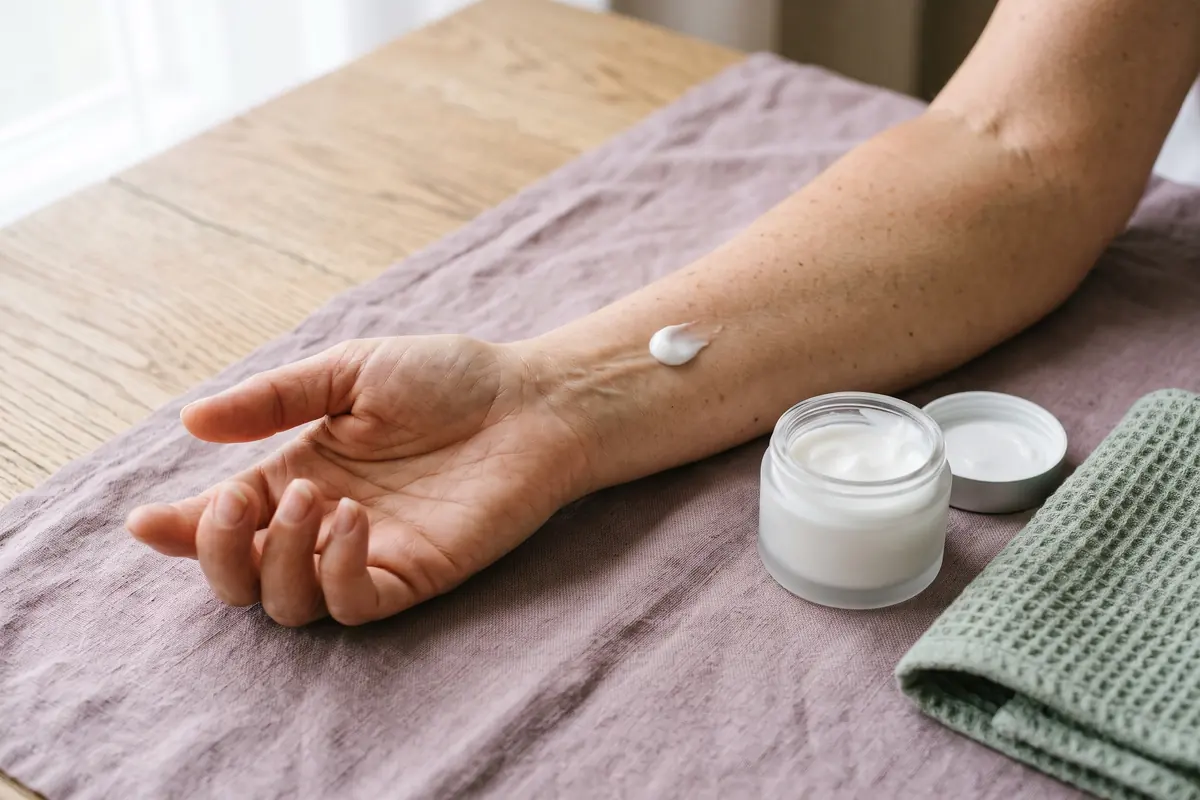
The American Academy of Dermatology recommends dabbing a small amount on your inner forearm twice a day for 4 to 5 days. If there is no reaction, it is likely safe to use on your face. Stop if you notice any of these signs:
- Redness
- Itching
- Stinging that does not fade
- A rash
- Swelling
- New breakouts
If you switch to a different scent or formula, patch test again, because it is a different product.
If your skin reacts
If your skin reacts after using tallow, move through these steps calmly.
- Stop using the tallow.
- Rinse the area gently with lukewarm water and a mild cleanser, and leave other new products off your skin for now.
- See a dermatologist if you notice dryness with itching, cracking, or redness that does not settle. Breakouts that are painful, deep, or keep coming back also warrant a visit. So do a rash, swelling, or hives after applying a product, and any skin condition you already treat with a doctor’s help.
- If you have swelling of the lips, tongue, or face, or any trouble breathing, seek emergency medical care right away.
How to lower your risk
A few habits lower the odds of a reaction.
- Apply a thin layer to damp skin.
- If your face is oily, start on dry body spots first.
- Choose a plain, unscented tallow balm if fragrance bothers your skin.
- Store it well with the lid on, somewhere cool and dark, and check the smell. Gone-off tallow smells sharp, sour, or stale.
- Choose brands that share their sourcing, rendering, and full ingredient list.
When you are ready, the 5-minute mature skin fit check can help you decide whether tallow belongs in your routine.
Common questions
- Why are some dermatologists against beef tallow?
- One dermatologist puts it plainly: there is no evidence that tallow has benefits for your skin beyond being a natural moisturizer. The American Academy of Dermatology's guidance to dermatologists also flags possible acne worsening in acne-prone skin, the risks of fragranced or homemade products, and proper storage and contamination. In the US, cosmetics do not need FDA approval before they are sold, so each company is responsible for its own product's safety.
- Can you be allergic to tallow?
- A reaction can come from the tallow itself or from what is added to it. Fragrance, which includes essential oils, is among the most common causes of allergic contact dermatitis. People with alpha-gal syndrome or a known beef allergy should ask their doctor before using tallow on skin.
- Is tallow bad for your skin?
- Not for most people who tolerate a patch test, but it is not right for everyone. Those with acne-prone, oily, or sensitive skin are more likely to experience pore clogging or breakouts. If tallow causes breakouts, a rash, or small bumps, stop using it.
- Why do some people stop using tallow?
- Common reasons include breakouts or clogged pores, especially on oily or acne-prone skin. Others stop because of a rash from added fragrance, or because the tight-but-shiny feel signals their skin lacks water. A jar that has gone off is another reason to set it aside.
Sources & further reading
- American Academy of Dermatology, “Beef tallow” (clinical guidance on viral skin care trends)
- American Academy of Dermatology, “Folliculitis”
- Scripps Health, “Beef Tallow for Skin Care: What Dermatologists Want You to Know” (2026)
- Cleveland Clinic, “Is Beef Tallow Good for Your Skin?” (2026)
- American Academy of Dermatology, “Contact dermatitis: Causes”
- Danby et al., “Effect of Olive and Sunflower Seed Oil on the Adult Skin Barrier: Implications for Neonatal Skin Care,” Pediatric Dermatology (2013)
- Russell et al., “Tallow, Rendered Animal Fat, and Its Biocompatibility With Skin: A Scoping Review,” Cureus (2024)
- Almatroud et al., “Beef Tallow-Based Skincare Claims in Social Media: A Cross-Sectional Analysis,” J. Cosmet. Dermatol. (2025)
- U.S. FDA, “FDA Authority Over Cosmetics: How Cosmetics Are Not FDA-Approved, but Are FDA-Regulated”
- CDC, “Fast Facts: Products That May Contain Alpha-gal”
- American Academy of Dermatology, “Wrinkle remedies: How to reduce the signs of aging”