You're listening to the audio version of "Whipped Tallow Balm You Can Make Tonight," from Admire Age.
There's something quietly satisfying about making your own balm, and this is the one we keep coming back to. Grass-fed tallow whipped with a single carrier oil until it's light enough to melt the moment it meets warm skin. No long ingredient list, no fuss. Just a soft, cushioning balm your skin recognizes.
It takes about twenty minutes, it's beginner-friendly, and it fills one four-ounce jar.
Why it works: tallow's lipids are remarkably close to your skin's own, so it absorbs instead of sitting on top. Whipping folds in air for that whisper-light feel. Rich, never heavy.
Here's what you'll need. Three point two ounces of cosmetic-grade grass-fed tallow, measured by weight. Zero point eight ounces of jojoba or sweet almond oil. Optionally, ten to fifteen drops of a skin-safe essential oil, and lavender is lovely here. For equipment, you'll want a double boiler, a hand mixer, a bowl of ice, and a clean four-ounce jar.
Now the method, in five steps. First, gently melt the tallow in a double boiler over low heat until it's just liquid. Second, stir in the carrier oil and remove it from the heat. Third, nest the bowl in ice and let the mix cool to the softness of soft butter. Fourth, whip on medium for two to three minutes, until it doubles and holds soft peaks. And fifth, whip in the essential oil if you're using it, then spoon it into your jar. It firms up over twenty-four hours.
A few maker's tips. Weigh your ingredients if you can. Balms are forgiving, but the ratio is what gives you that cloud-soft texture. If it sets firmer than you like, gently warm it and re-whip with a few extra drops of oil. And if you're working in a warm kitchen, chill the bowl a little longer before whipping so it holds its peaks.
On storage: in a clean, dry jar away from direct sun, it keeps beautifully for about six months. There's no water in the recipe, so it needs no preservative. Just scoop with clean, dry fingers.
Two safety notes. Patch test on your inner arm before first use, and keep your tools and jar clean and fully dry, because water shortens shelf life.
A few questions that come up. Can you use this on your face? Yes, it's gentle enough for face, body, and dry patches. If your skin is prone to breakouts, start with a thin layer at night and see how it settles. Why might yours turn grainy? Graininess usually means the tallow cooled unevenly. Gently melt it down and re-whip, and it comes back smooth. And which carrier oil is best? Jojoba is our default because it's light and shelf-stable. Sweet almond works too, and olive oil makes a richer, slower-absorbing balm.
Thanks for listening. You'll find the full recipe, with photos, at admireage.com.
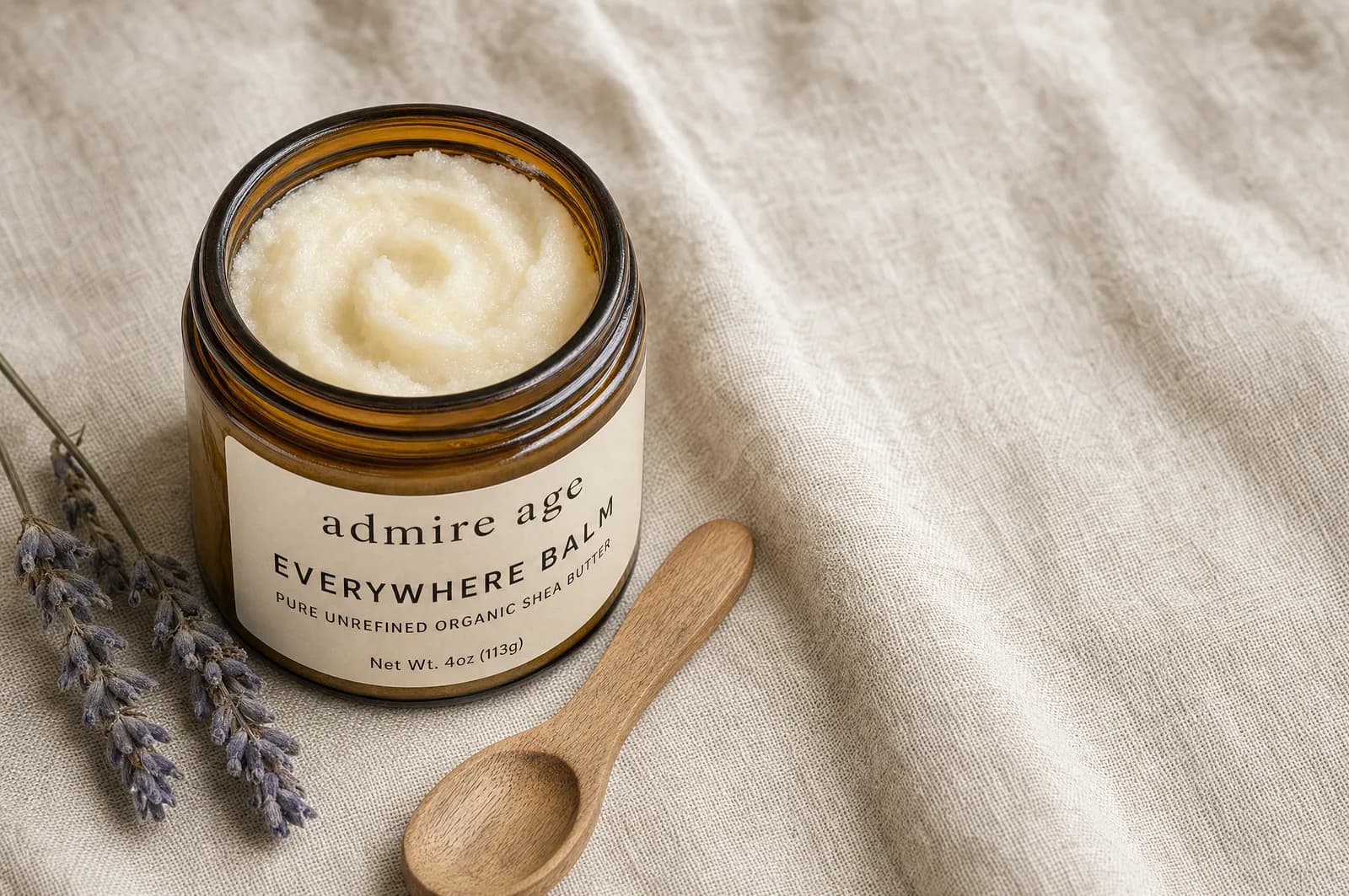
Whipped tallow balm you can make tonight
There's something quietly satisfying about making your own balm — and this is the one we keep coming back to. Grass-fed tallow whipped with a single carrier oil until it's light enough to melt the moment it meets warm skin. No long ingredient list, no fuss — just a soft, cushioning balm your skin recognizes.
Fills one 4 oz jar20 minBeginner-friendly
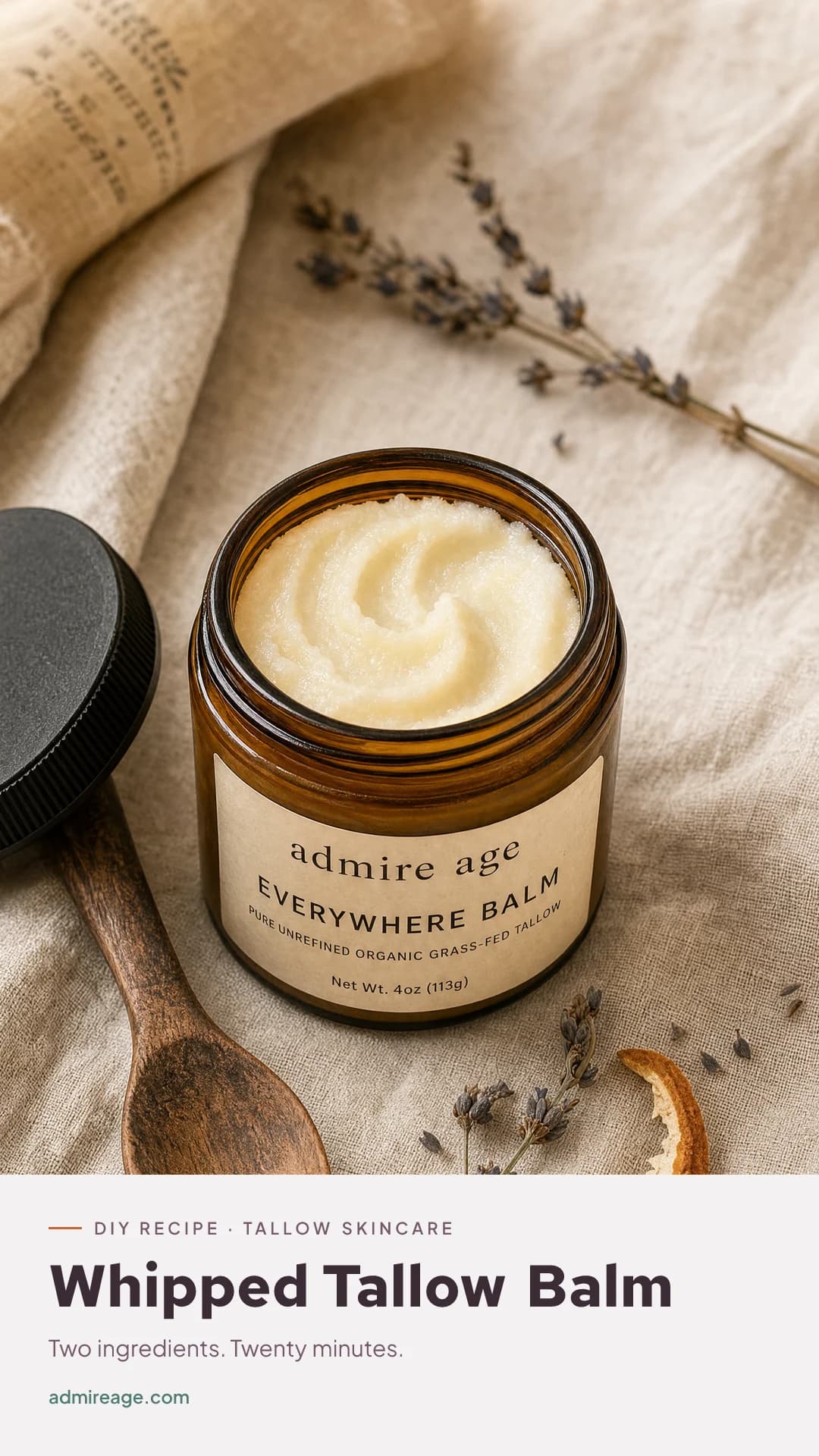
Why this works
Tallow's lipids are remarkably close to your skin's own, so it absorbs instead of sitting on top. Whipping folds in air for that whisper-light feel — rich, never heavy.
What you'll need
- 3.2 oz grass-fed tallow (cosmetic-grade, by weight)
- 0.8 oz jojoba or sweet almond oil
- Optional: 10–15 drops skin-safe essential oil (lavender is lovely)
- Double boiler, hand mixer, a bowl of ice, a clean 4 oz jar
Before you start
- Patch test on your inner arm before first use.
- Keep tools and jar clean and fully dry — water shortens shelf life.
How to make it
- 1
Gently melt the tallow in a double boiler over low heat until just liquid.
- 2
Stir in the carrier oil and remove from the heat.
- 3
Nest the bowl in ice and let the mix cool to the softness of soft butter.
- 4
Whip on medium 2–3 minutes, until it doubles and holds soft peaks.
- 5
Whip in essential oil if using, then spoon into your jar. It firms up over 24 hours.
Maker's tips
- Weigh your ingredients if you can — balms are forgiving, but the ratio is what gives you that cloud-soft texture.
- If it sets firmer than you like, gently warm it and re-whip with a few extra drops of oil.
- Working in a warm kitchen? Chill the bowl a little longer before whipping so it holds its peaks.
Keeping it fresh
In a clean, dry jar away from direct sun, it keeps beautifully for about six months. There's no water in the recipe, so it needs no preservative — just scoop with clean, dry fingers.
Common questions
- Can I use this on my face?
- Yes — it's gentle enough for face, body, and dry patches. If your skin is prone to breakouts, start with a thin layer at night and see how it settles.
- Why did mine turn grainy?
- Graininess usually means the tallow cooled unevenly. Gently melt it down and re-whip — it comes back smooth.
- What carrier oil is best?
- Jojoba is our default because it's light and shelf-stable. Sweet almond works too; olive oil makes a richer, slower-absorbing balm.
Keep reading
Love the ritual, not the cleanup?
Making your own is a joy — but on the busy weeks, ours is whipped, jarred, and ready. Same grass-fed tallow, none of the dishes.
DIY safety note
Keep homemade tallow skincare clean, simple, and short-lived
Most homemade tallow balms and butters are preservative-free, so how long a batch lasts comes down to careful rendering, clean jars, dry hands, and cool storage. Strain the rendered fat well to remove water and solids, since water is the main cause of early rancidity.
If the scent, color, or texture starts to change, treat that as a possible rancidity sign and stop using the batch. Make small amounts you will finish in a few months.
- Render low and slow from grass-fed suet, then strain until the fat runs clear.
- Dilute essential oils carefully, especially for sensitive or reactive skin.
- Patch test any new recipe on your inner arm before using it on your face.