You're listening to the audio version of "Whipped Tallow and Honey Balm," from Admire Age.
Grass-fed tallow whipped with a whisper of raw honey. A little softer, a little more comforting, and a quiet favorite when the weather turns and skin feels tight. It's the whipped balm with a touch more tenderness.
It takes about twenty-five minutes, it's beginner-friendly, and it fills one four-ounce jar.
Why it works: honey is a natural humectant, which means it helps skin hold onto moisture, while tallow rebuilds the cushion on top. Together they leave skin soft without any heaviness.
Here's what you'll need. Half a cup of grass-fed tallow. One tablespoon of jojoba or olive oil. Half a teaspoon of raw honey, and start small there. Optionally, five to ten drops of a skin-safe essential oil. You'll also want a double boiler, a hand mixer, and a clean four-ounce jar.
The method is four steps. First, melt the tallow gently, then stir in the carrier oil and honey until smooth. Second, cool it until it's opaque but still soft. Third, whip until light and fluffy, adding the essential oil at the end. And fourth, transfer it to your jar, where it settles and firms over a day.
Three tips worth knowing. Use raw, unpasteurized honey if you can, and start with just a little, because too much can make the balm tacky. Warm the honey slightly so it blends in smoothly rather than seizing into beads. And use a hand mixer. Whisking by hand won't get you the same airy lift.
For storage, keep it in a clean, dry jar away from heat and light and it'll stay lovely for about three to four months. Honey draws in moisture, so always use dry fingers or a small spoon.
On safety: patch test first, because raw honey is a natural ingredient but still worth a check. And keep everything dry to protect the balm over time.
A few common questions. Is this safe for sensitive skin? It's designed with sensitive skin in mind, but everyone's different, so patch test on your inner arm first, especially with raw honey in the mix. Can you skip the honey? Absolutely. Leave it out and you've got our classic whipped tallow balm. And if it went sticky, that's usually a little too much honey. Re-whip with a touch more tallow to bring back the soft, dry-touch finish.
Thanks for listening. You'll find the full recipe at admireage.com.
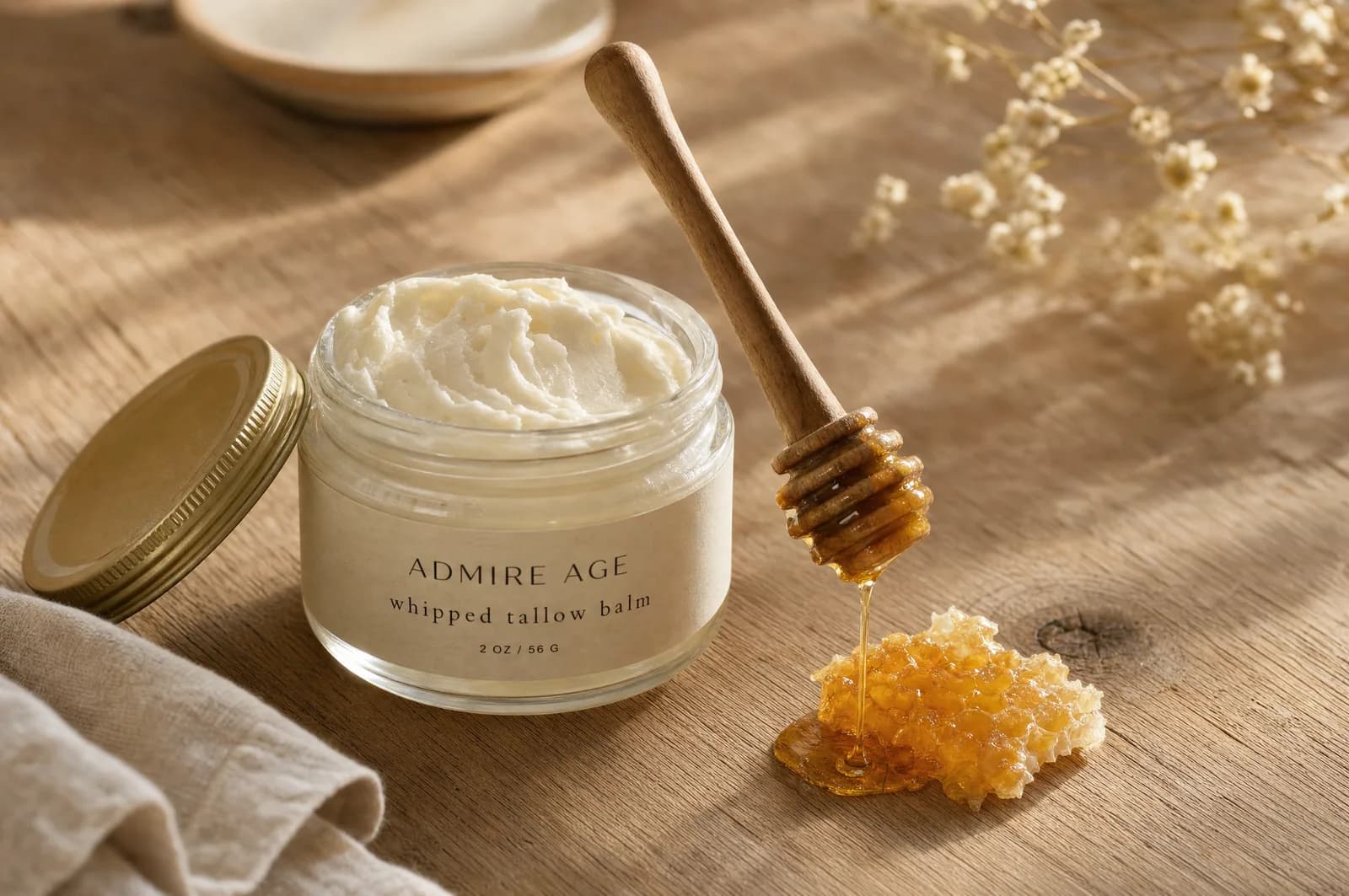
Whipped tallow & honey balm
Grass-fed tallow whipped with a whisper of raw honey — a little softer, a little more comforting, and a quiet favorite when the weather turns and skin feels tight. It's the whipped balm with a touch more tenderness.
Fills one 4 oz jar25 minBeginner-friendly
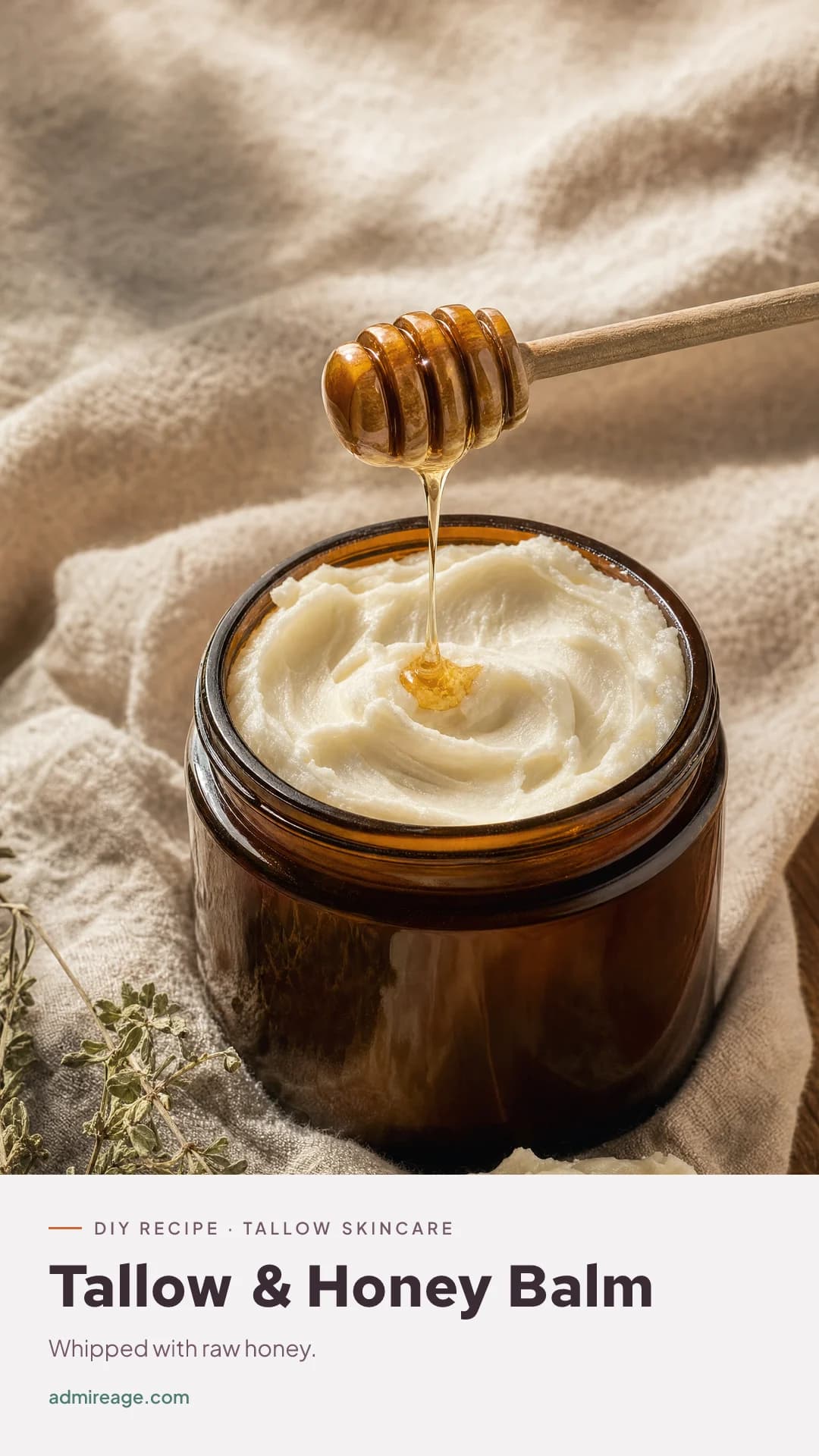
Why this works
Honey is a natural humectant — it helps skin hold onto moisture — while tallow rebuilds the cushion on top. Together they leave skin soft without any heaviness.
What you'll need
- 1/2 cup grass-fed tallow
- 1 tbsp jojoba or olive oil
- 1/2 tsp raw honey (start small)
- Optional: 5–10 drops skin-safe essential oil
- Double boiler, hand mixer, a clean 4 oz jar
Before you start
- Patch test first — raw honey is a natural ingredient but still worth a check.
- Keep everything dry to protect the balm over time.
How to make it
- 1
Melt the tallow gently, then stir in the carrier oil and honey until smooth.
- 2
Cool until opaque but still soft.
- 3
Whip until light and fluffy, adding essential oil at the end.
- 4
Transfer to your jar; it settles and firms over a day.
Maker's tips
- Use raw, unpasteurized honey if you can, and start with just a little — too much can make the balm tacky.
- Warm the honey slightly so it blends in smoothly rather than seizing into beads.
- A hand mixer makes this; whisking by hand won't get you the same airy lift.
Keeping it fresh
Keep it in a clean, dry jar away from heat and light, and it'll stay lovely for about three to four months. Honey draws in moisture, so always use dry fingers or a small spoon.
Common questions
- Is this safe for sensitive skin?
- It's designed with sensitive skin in mind, but everyone's different — patch test on your inner arm first, especially with raw honey in the mix.
- Can I skip the honey?
- Absolutely — leave it out and you've got our classic whipped tallow balm.
- It went sticky. What happened?
- That's usually a little too much honey. Re-whip with a touch more tallow to bring back the soft, dry-touch finish.
Keep reading
Love the ritual, not the cleanup?
Making your own is a joy — but on the busy weeks, ours is whipped, jarred, and ready. Same grass-fed tallow, none of the dishes.
DIY safety note
Keep homemade tallow skincare clean, simple, and short-lived
Most homemade tallow balms and butters are preservative-free, so how long a batch lasts comes down to careful rendering, clean jars, dry hands, and cool storage. Strain the rendered fat well to remove water and solids, since water is the main cause of early rancidity.
If the scent, color, or texture starts to change, treat that as a possible rancidity sign and stop using the batch. Make small amounts you will finish in a few months.
- Render low and slow from grass-fed suet, then strain until the fat runs clear.
- Dilute essential oils carefully, especially for sensitive or reactive skin.
- Patch test any new recipe on your inner arm before using it on your face.